Some home gadgets look useful the moment you see them online.
A quick video shows a messy drawer becoming perfect, a kitchen task done in seconds, or a cleaning job that suddenly looks effortless. It is easy to think, “I could use that.”
But once the product arrives, the real question begins: will you actually use it?
Useful home gadgets are different from viral home gadgets. A useful product solves a real problem in your home, fits your space, works with your routine, and does not become another item hiding in a drawer.
This guide will help you choose useful home gadgets with a more practical mindset, so you can avoid random clutter and focus on smart finds that support everyday life.
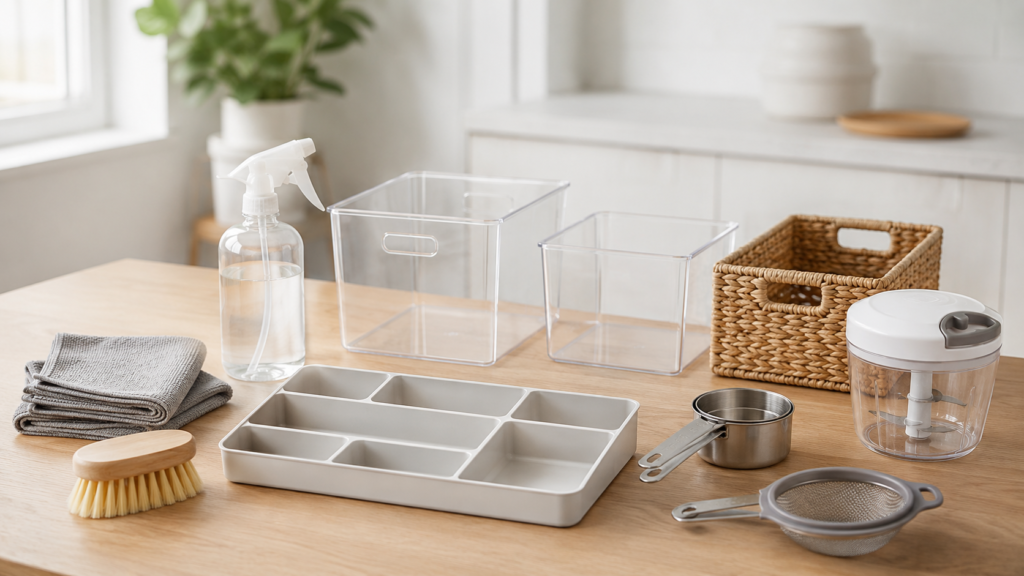
Quick Answer: What Makes a Home Gadget Actually Useful?
A home gadget is actually useful when it solves a problem you already have, fits your home, is easy to use, and makes a repeated task simpler.
A viral gadget may look impressive, but a useful gadget should pass a few basic questions:
- Does it solve a real problem in my home?
- Will I use it more than once or twice?
- Is it easy to clean, store, or maintain?
- Does it fit my kitchen, bathroom, closet, cabinet, or laundry area?
- Does it make a task easier without creating a new problem?
If a product only looks fun but does not fit your routine, it may not be worth buying.
Why Viral Home Gadgets Can Be Misleading
Viral home gadgets are often shown in perfect conditions.
The drawer is the right size. The counter is clear. The cabinet has enough space. The product is brand new. The person using it already knows exactly what to do.
Real homes are different.
You may have limited storage, an awkward cabinet, a small kitchen, kids’ items everywhere, cleaning supplies in different places, or a routine that does not match the video. That does not mean the product is bad. It only means the product may not be right for your home.
At MeasureTheTrade, we prefer practical home finds that solve real everyday problems instead of products that only look clever for a few seconds online.
Useful Home Gadgets Start With a Real Problem
The best way to avoid random buying is to start with the problem, not the product.
Before buying a home gadget, name the issue clearly.
For example:
- “My kitchen counter is always crowded.”
- “I hate scrubbing the bathroom grout.”
- “My pantry items are hard to see.”
- “My small apartment has no good laundry space.”
- “I keep losing small items in drawers.”
- “My cleaning supplies are scattered around the house.”
Once the problem is clear, it becomes much easier to judge whether a product is useful.
The Difference Between Useful and Viral Home Gadgets
Not every viral product is useless. Some viral gadgets become popular because they genuinely solve a common problem.
The issue is that popularity alone does not prove usefulness.
| Type | What It Focuses On | What to Ask Before Buying |
|---|---|---|
| Useful home gadget | Solves a real household problem | Will this make my routine easier? |
| Viral home gadget | Looks impressive or satisfying online | Will I still use this after the excitement fades? |
| Practical home find | Fits your space, habit, and problem | Does this match my actual home? |
| Random gadget | Feels clever but has no clear purpose | Am I buying this because it solves something or because it looks fun? |
A product can be both viral and useful. But if it is only viral, it may become clutter.
7 Questions to Ask Before Buying Any Home Gadget
These questions can help you make a better decision before adding another product to your cart.
1. What Problem Does This Product Solve?
This is the most important question.
A useful home gadget should solve a specific problem. It should not rely only on curiosity, trends, or a clever design.
For example, an under-sink organizer may be useful if your cleaning supplies keep falling over. A compact food chopper may be useful if you regularly prep vegetables. A slim laundry cart may be useful if your laundry area is narrow.
But if the problem does not exist in your home, the product may not be necessary.
2. Will I Use It Regularly?
Some gadgets are exciting for one use, then forgotten.
A product is more likely to be useful if it supports something you already do often. This could be cooking, cleaning, organizing, laundry, food storage, or tidying up small spaces.
If you cook once a month, a special food prep gadget may not be worth the space. If you clean the bathroom weekly, a better scrub brush or compact cleaning tool may be more useful.
3. Is It Easy to Store?
Storage matters more than many buyers realize.
A product can be helpful during use but annoying the rest of the time. This is especially true for small kitchens, apartments, bathrooms, closets, and laundry areas.
Before buying, think about where the item will live.
- Will it fit in a drawer?
- Can it hang on a hook?
- Can it stack with other items?
- Will it take over counter space?
- Will it block access to things you use more often?
If the product has no clear storage place, it may add to the clutter you are trying to reduce.
4. Is It Easy to Clean?
This is especially important for kitchen gadgets and cleaning tools.
If a gadget has too many small parts, sharp corners, or hard-to-reach areas, it may become frustrating to clean. Over time, that frustration can make you stop using it.
A practical product should save effort overall. If it creates more cleanup than it saves, it may not be the right choice.
5. Does It Fit My Space?
Many products look smaller online than they are in real life.
Before buying organizers, carts, bins, baskets, racks, or kitchen tools, check the dimensions carefully. This matters even more if you live in an apartment, small home, dorm, or shared space.
For small homes, it is often better to choose compact, foldable, stackable, or vertical designs. You can explore more ideas in our Small Space Solutions category.
6. Does It Replace Something Harder or Slower?
A useful gadget often replaces a task that feels slow, messy, awkward, or annoying.
For example:
- A microfiber mop may replace repeated paper towel cleanup.
- A drawer organizer may replace daily searching.
- A cleaning caddy may replace carrying bottles one by one.
- A compact chopper may replace slow prep for people who cook often.
- A slim storage cart may replace items sitting on the floor.
If the gadget does not improve your current method, it may not add much value.
7. Would I Still Want It If It Were Not Trending?
This question is simple but useful.
Trends create urgency. They make products feel more important than they are. But a helpful home product should still make sense after the trend passes.
If you would still want the item without the video, the discount label, or the social media excitement, it may be worth considering.
Common Mistakes When Buying Home Gadgets
Even practical shoppers can end up with unused products. Here are some common mistakes to avoid.
Buying for an Imaginary Routine
Sometimes people buy products for the lifestyle they wish they had, not the routine they actually follow.
For example, buying advanced meal prep containers may not help if you rarely meal prep. Buying a detailed pantry system may not work if you prefer simple storage. Buying a specialized kitchen tool may not make sense if you do not cook that type of food.
Choose products for your real habits.
Ignoring Measurements
This is a major issue with organization products.
Cabinets, drawers, pantry shelves, bathroom sinks, and closets vary widely. A product that works in one home may not fit another.
Measure first, especially for home organization products.
Buying Too Many Solutions at Once
One useful product can help. Ten random products can create more clutter.
If you are improving a space, start with one problem area. Test what works. Then add more only if needed.
Choosing Complicated Products for Simple Problems
Not every problem needs a complex gadget.
Sometimes a basic bin, hook, caddy, shelf, or divider is better than a product with too many parts. Simple tools are often easier to use consistently.
Assuming Popular Means Better
A product can be popular because it looks satisfying online, not because it works well for every household.
Popularity can help you discover ideas, but your decision should depend on your space, routine, and actual problem.
Useful Home Gadgets by Category
Different parts of the home need different types of products. Here are a few practical categories to consider.
Cleaning Tools
Useful cleaning tools help make repeated chores easier.
Look for items that are comfortable to use, easy to rinse or wash, and practical for the surfaces in your home. Examples may include microfiber cloths, scrub brushes, dusters, cleaning caddies, or tools for corners and tight spaces.
For any cleaning tool, follow the product instructions and avoid using it on surfaces where it is not recommended.
Kitchen Gadgets
Useful kitchen gadgets should support your actual cooking habits.
A compact tool may be useful if it helps with food prep, storage, measuring, draining, or reducing counter clutter. But if a gadget is bulky, hard to clean, or too specific, it may not be worth the space.
Small kitchens benefit most from multi-use tools and easy storage.
Home Organization Products
Organization products are useful when they create a clear home for items you already use.
They are less useful when they simply hide clutter without solving the system behind it.
Good options often include drawer dividers, pantry bins, under-sink shelves, cable organizers, closet storage, and simple labels.
Small Space Solutions
For small homes and apartments, the best gadgets often save space or use vertical storage.
Foldable baskets, slim carts, wall-mounted organizers, stackable bins, and compact kitchen tools may be worth considering if they fit your layout.
Everyday Home Helpers
Everyday home helpers are small products that solve annoying daily problems.
They may include cord holders, furniture sliders, drawer inserts, sink accessories, reusable storage items, or small tools that make repeated tasks easier.
These items are often affordable, but they should still pass the usefulness test.
A Simple Buying Checklist for Useful Home Gadgets
Use this checklist before buying your next home gadget.
| Question | Good Sign | Warning Sign |
|---|---|---|
| Does it solve a real problem? | You can name the exact issue | You only like how it looks online |
| Will you use it often? | It supports a regular task | It is for a rare situation |
| Is it easy to store? | It has a clear storage spot | You are not sure where it will go |
| Is it easy to clean? | Simple parts and simple maintenance | Many small parts or awkward corners |
| Does it fit your space? | Dimensions match your area | You have not measured yet |
| Does it improve your current method? | It makes a task easier or faster | It adds extra steps |
| Would you buy it without the hype? | It still makes sense | The trend is the main reason |
When a Home Gadget Is Worth Considering
A home gadget may be worth considering when it solves a repeated household problem and makes your routine easier.
It is especially worth considering if:
- You already deal with the problem often
- The product is simple to use
- You have a clear place to store it
- It fits your space and budget
- It replaces a harder or messier method
- It is easy to clean or maintain
- It supports your real routine
This is the kind of product we consider a smart practical find.
When You Should Skip a Home Gadget
Skipping a product can be the better decision.
You may want to skip a home gadget if:
- You cannot identify a real problem it solves
- You already own something that does the same job
- It looks bulky or hard to store
- It seems difficult to clean
- It only works for one rare task
- It creates more steps than it removes
- You are buying it mainly because it is trending
How to Build a Practical Home Without Buying Random Gadgets
You do not need to fill your home with products to make it more functional.
A better approach is to improve one problem area at a time.
Start with the area that causes the most daily frustration. Maybe it is the kitchen counter, bathroom cabinet, laundry corner, pantry shelf, or cleaning supply area.
Then ask:
- What is not working here?
- What items do I use most?
- What gets in the way?
- What would make this easier to maintain?
- Do I need a product, or do I need to remove something first?
This approach helps you buy fewer but better products.
You can also browse our Smart Practical Finds category for guides focused on useful home products, not random viral clutter.
Final Thoughts: Buy for Real Life, Not the Trend
The most useful home gadgets are not always the most exciting ones.
They are the products that quietly make everyday life easier.
A good home gadget solves a problem you already have. It fits your space. It supports your routine. It is easy to use, clean, and store. It still makes sense after the online excitement fades.
That is the difference between a useful home gadget and a random viral product.
Before buying, slow down and ask what the product will actually do for your home. If it solves a real problem in a simple way, it may be worth considering. If not, leaving it behind may be the smarter choice.
FAQ
What are useful home gadgets?
Useful home gadgets are products that solve real household problems and make daily tasks easier. They may help with cleaning, cooking, organizing, laundry, storage, or small space living.
How do I know if a home gadget is worth buying?
A home gadget may be worth buying if it solves a problem you already have, fits your space, is easy to use, and supports a task you do regularly.
Are viral home gadgets usually useful?
Some viral home gadgets are useful, but not all of them. A product can look impressive online and still be a poor fit for your home, routine, or storage space.
What should I avoid when buying home gadgets?
Avoid gadgets that are bulky, hard to clean, too specific, difficult to store, or bought only because they are trending. Also avoid duplicate products that do the same job as something you already own.
What are the best useful home gadgets for small spaces?
For small spaces, look for compact, foldable, stackable, or vertical products. Slim carts, drawer dividers, hanging organizers, compact kitchen tools, and under-sink organizers may be practical options.
Should I buy a home gadget if it is cheap?
A low price does not automatically make a product useful. Even affordable gadgets can become clutter if they do not solve a real problem or fit your routine.